 GetPaid
What to Say When a Client Says "The Check Is in the Mail"
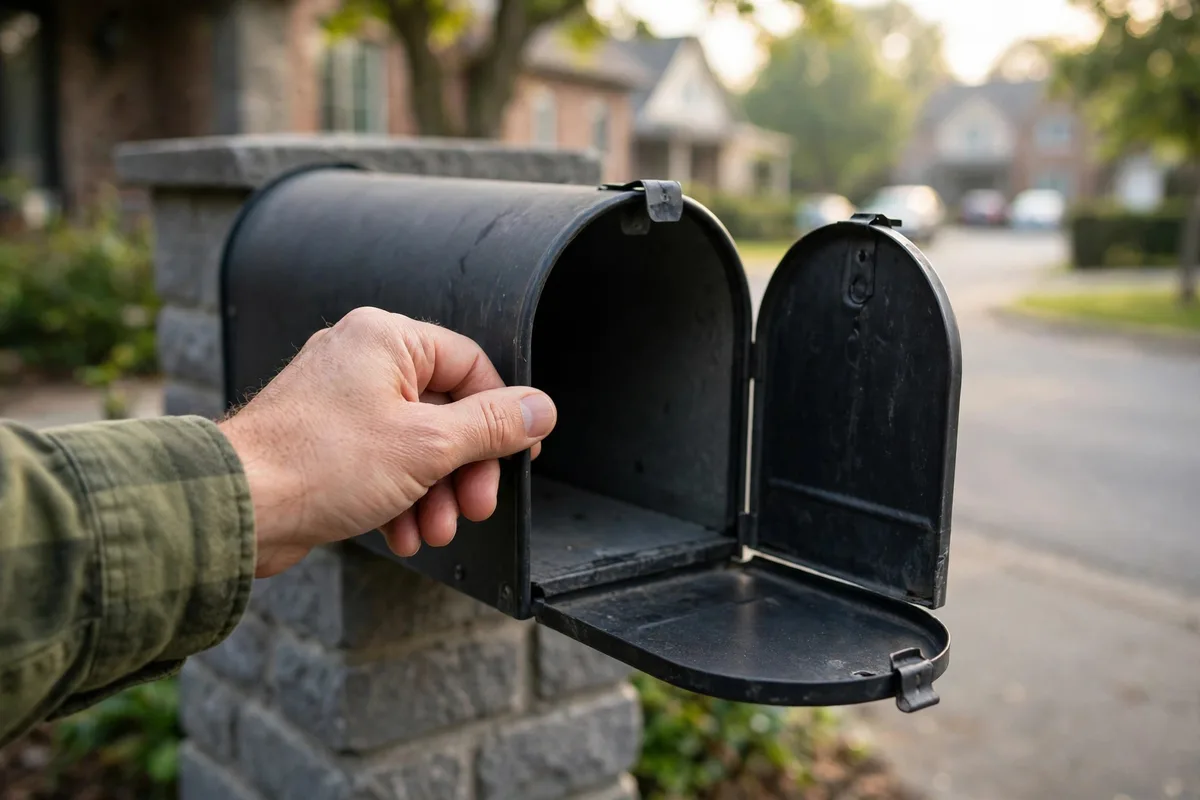
The email that says nothing
It is 9 p.m. You sent the invoice three weeks ago. You sent a polite reminder last Tuesday. And now, finally, a reply: "Sorry for the delay — the check is in the mail."
You read it twice. It sounds like good news. It is also, somehow, no news at all. There is no date. No tracking number. No name of the person who sent it. Just a sentence that asks you to stop asking — and to wait a little longer, again.
Here is the thing most freelancers learn the slow way: a stall phrase is not a lie you need to catch. It is a sentence with no date in it, and your job is not to argue with it. Your job is to put a date in it. Every script in this article does the same one thing: it thanks the client, accepts what they said at face value, and asks for the one detail that turns a promise into a plan — the date the money lands in your account, and the name of the person who will confirm it.
You do not need to be confrontational to do this. You do not need to accuse anyone of anything. You just need to stop accepting sentences that end the conversation, and start collecting sentences that start a countdown.
The three rules before you reply to any excuse
Rule 1: Never argue about whether it is true. You cannot verify from your inbox whether a check was mailed, whether finance is "looking into it," or whether an approval is pending. Arguing about it wastes your one advantage — the client is still talking to you — and turns a payment conversation into a credibility fight. Accept the sentence. Then ask for the date.
Rule 2: Always ask for a date, a name, and a proof. A real payment has all three. A date: "What day will it land in my account?" A name: "Who on your side can confirm it?" A proof: a tracking number, a remittance advice, a screenshot of the transfer, a confirmation email from finance. If the client can give you all three, you can relax and wait. If they can give you none of them, you have learned something important — and you should say so, politely, by asking again.
Rule 3: Write down the date the moment they give it. Reply in the same thread, in writing: "Thanks — confirming we agreed payment will land by [date], and [name] will confirm. I will check in on [date] if it has not arrived." Now the stall has a deadline, and the next email writes itself. If the date passes with no payment, you are not starting a new argument. You are following up on their own words.
With those three rules, here are the six phrases you will hear most, and exactly what to say back.
1. "The check is in the mail" / "Payment has been sent"
What it usually means: It might be true. It might also mean the payment was approved but not yet sent, or that someone intends to send it. You cannot tell from the sentence, and that is the point — the sentence is designed to buy a week of silence.
Say this:
Thanks for the update — glad to hear it is on its way. Could you let me know the date it was sent, and roughly when it should land? If there is a tracking number or a remittance note, that would help me match it on my side.
Ask for: the send date and the expected arrival date. Checks and bank transfers take different amounts of time depending on the bank and the payment method, so do not guess — ask them to name the date they expect it to arrive, and confirm it in writing.
If the date passes: "Hi [First Name] — following up on your note that payment was sent on [date]. It has not arrived as of today, [date]. Could you check with finance and let me know the new date it will land? If the check was lost in the mail, I am happy to accept a bank transfer instead — the details are on the invoice."
The switch that ends this one for good: offer the bank transfer. A check that is "in the mail" cannot be tracked by you; a transfer can. If the client genuinely sent a check, they will not mind you offering a faster route for the next invoice. If they resist the transfer, that tells you the check may not exist — and it tells you to move to the escalation steps in What to Do When a Client Doesn't Pay: A Step-by-Step Escalation Guide for Freelancers.
2. "It's being processed" / "Finance is looking into it"
What it usually means: This is the vaguest stall of all, because "processing" has no owner and no end. It might mean the invoice is genuinely in a queue. It might mean nobody has opened it. Either way, "being processed" is a status, not a date.
Say this:
Thanks — could you tell me who in finance has it, and what date it is expected to clear? If there is anything missing on my side — a PO number, a corrected invoice, a different format — I can send it today so nothing holds it up.
Ask for: a name in finance and a clearance date. The second sentence matters as much as the first: "is anything missing?" removes the most common silent reason a payment sits in a queue — someone is waiting on a corrected invoice that nobody asked for.
If the date passes: "Hi [First Name] — checking in on invoice [number]. You mentioned it was being processed and expected to clear by [date], but it has not landed yet. Could you confirm the new date, or put me in touch with [finance contact name] directly so I can answer any questions they have?"
When to stop accepting it: if "being processed" comes back a second time with no name and no date, it has stopped being information. Say so, gently: "I understand it takes time — could we agree on a date it will be completed by, so I can plan around it?" A client who can give you a date will. A client who cannot is telling you the payment is not actually moving.
3. "I need approval from my boss / finance first"
What it usually means: This one is often true — and it is also the easiest to fix, because it has a clear next step. Your invoice is sitting with someone you have never spoken to, and your contact is not the person who can release the money.
Say this:
No problem — could you let me know who needs to approve it, and when you expect to hear back? I am happy to send a short summary they can approve from, if that helps — invoice number, amount, and due date, all in one place.
Ask for: the approver's name and the date you will hear back. Offering the one-page summary is not extra work for you — it is the thing that gets your invoice approved, because approvers approve what they can understand in thirty seconds.
If the date passes: "Hi [First Name] — following up on the approval for invoice [number]. Has [approver name] had a chance to look at it? If it helps, I can send the summary directly to them — just let me know the best address."
The lesson for next time: this is why your invoice should name the approver before the work starts. The payment terms that prevent this — including who approves, and by when — are the whole subject of How to Get Clients to Pay on Time: 7 Payment Terms That Actually Work. For now, though, the fix is simple: get the name, get the date, and offer to do the chasing for them.
4. "We never received your invoice"
What it usually means: Sometimes it is true — the invoice went to the wrong inbox, or to someone who left. Sometimes it is a stall that resets the clock: if the invoice "never arrived," then in their telling, it is not late yet. Either way, the answer is the same, and it takes you two minutes.
Say this:
Sorry about that — resending it now, attached to this email. The invoice number is [number], for [amount], originally sent on [date] and due on [date]. Could you confirm you have it this time, and let me know the date it will be paid?
Ask for: a confirmation that they received it, and a payment date counted from today — not from the original due date they are now disputing. Attach the invoice again, in the same email, so there is no second round of "I still can't find it."
If it happens twice: stop emailing the same address. "I have sent this twice now to [address]. Could you give me the direct address for your accounts payable team, so I can send it straight to them?" And start keeping proof of sending: the sent email, the read receipt if you have one, the date you first sent it. If this ever becomes a formal dispute, that paper trail is the whole case — the full ladder is in What to Do When a Client Doesn't Pay: A Step-by-Step Escalation Guide for Freelancers.
5. "We're having cash-flow problems" / "Can we pay next month?"
What it usually means: This one deserves to be taken seriously, because it is often honest — and because it is the only stall that is actually a negotiation. The client is not saying they will not pay. They are saying they cannot pay on the date you agreed. That is a different conversation, and it needs a different answer: not a scolding, and not a blank yes.
Say this:
I understand — thank you for telling me straight. I can work with a new date if we agree on it in writing. Could we split it — [amount] by [date], and the rest by [date]? If we put that in writing, I can plan around it, and we keep the project moving.
Ask for: a written split-payment plan with two real dates, not a vague "next month." A client in genuine difficulty will usually accept a split — it is in their interest too, because it keeps you working. A client who refuses any date at all is not negotiating; they are stalling with a sadder sentence.
Do not do this: do not agree to "next month" with no date, and do not agree to keep working on new deliverables while the old invoice is unpaid and undated. If you agree to a new date, say plainly what happens on that date: "If it has not landed by [date], I will need to pause new work until it does." The pause-work clause, and how to word it in a contract before this ever happens, is one of the six clauses in 6 Payment Clauses Every Freelance Contract Needs.
6. "Can you resend it / change the format / add a PO number?"
What it usually means: Sometimes a real requirement — some companies genuinely cannot pay without a PO number. Sometimes it is a stall dressed as admin: each new request resets the clock by a few days, and after three rounds of corrections, a month has passed. The way to tell the difference is speed: a real requirement comes with a clear instruction and a fast approval once you comply.
Say this:
Of course — sending the updated invoice now, with [the PO number / the new format / the corrected line]. Could you confirm this is everything finance needs, and the date it will be paid once you have it?
Ask for: confirmation that this is the last thing they need. That one question is the whole trick: "Is there anything else finance needs from me?" If the answer is yes, you get the full list now instead of one item per week. If the answer is no, then the next delay has no excuse left — and you both know it.
If the requests keep coming: "I have now sent three versions of this invoice. Could you send me the full list of what finance needs, in one email, so I can get it all to you today?" At that point, stop revising and start escalating: a firm reminder citing the late fee is the next step, and the exact wording is in Late Fee Wording for Invoices: Exact Phrases You Can Copy.
When the date passes: the follow-up that writes itself
You did the hard part already — you got a date, in writing, in the same thread. So the follow-up is short, and it does not need to be angry:
Hi [First Name] — following up on invoice [number]. We agreed payment would land by [date], but it has not arrived as of today. Could you let me know the new date, and confirm whether anything is missing on my side?
Three things make this email work. It quotes their date, not yours, so it is not a demand — it is a reminder of their own words. It asks one question, not five. And it ends by offering help, which keeps the client talking to you instead of avoiding you.
If the new date passes too, stop emailing the same person the same way. Call. A two-minute call — invoice number, amount, the date they promised, one question: "Is there anything missing on my side?" — does what four emails cannot, because a person on the phone has to answer in real time. Then send a one-line email confirming what was agreed, so the agreement exists in writing. After that, the next step is not another script. It is the escalation ladder — firm reminder, late fee, pause on new work, formal demand — covered step by step in What to Do When a Client Doesn't Pay: A Step-by-Step Escalation Guide for Freelancers.
Make the excuses stop before they start
Every stall in this article has the same root cause: the payment had no date, no name, and no consequence attached to it before the work began. Three changes to your next contract fix most of it:
- A due date written as a date, not a habit. "Net 30" is a suggestion; "due November 30, 2026" is a deadline. The terms that get clients to pay on time are in How to Get Clients to Pay on Time: 7 Payment Terms That Actually Work.
- A late fee agreed in advance. A fee you never agreed cannot be charged when the excuses start. The exact wording is in Late Fee Wording for Invoices: Exact Phrases You Can Copy.
- A pause-work clause. The sentence "work pauses if payment is more than [X] days late" is what turns a stall into a decision for the client — because now waiting costs them something, not just you. It is one of the six clauses in 6 Payment Clauses Every Freelance Contract Needs.
And if the chasing itself is the part you want to stop doing by hand, that is what automatic reminders are for: invoicing tools like FreshBooks and Bonsai send the nudges on schedule, add the late fee you agreed, and put a payment link in every email — so "the check is in the mail" gets replaced by a dated transfer you can see. The comparison is in Best Invoicing Software With Automatic Payment Reminders (6 Tools Compared).
The next time a client tells you the check is in the mail, do not wonder whether it is true. Thank them, ask for the date, ask for the name, and write it down. A stall with a date on it is a plan. A stall without one is just a sentence — and you do not have to wait on a sentence.

Steal the exact words
Free sample: 3 late-payment email templates + the invoice checklist that gets invoices paid right the first time.
Want the whole system — all 12 templates, the contract clauses, late fee wording, and deposit scripts? That's The Get Paid Pack.
FAQ
What should I say when a client says "the check is in the mail"? Thank them, accept it at face value, and ask for the send date and the expected arrival date — plus a tracking number or remittance note if there is one. Confirm the date in writing in the same thread. If the date passes with no payment, follow up quoting their date, and offer a bank transfer instead.
How do I respond to "it's being processed" without sounding rude? Ask who in finance has it and what date it is expected to clear, and offer to send anything missing on your side today. You are not accusing anyone — you are asking for a name and a date, which is what a real payment process can always provide.
What if the client keeps giving me a new excuse every time? Ask for the full list at once: "Could you send me everything finance needs, in one email, so I can get it all to you today?" If the excuses continue after that, stop revising and escalate — firm reminder citing the late fee, then a pause on new work, then a formal demand.
Should I believe a client who says they have cash-flow problems? Take it seriously and negotiate: propose a written split-payment plan with two real dates. A client in genuine difficulty will usually accept a split. If they refuse any date at all, they are stalling, not negotiating — and you should not keep working on new deliverables while the old invoice is unpaid and undated.
When should I call instead of emailing? When a promised date has passed twice, or when the same excuse comes back a second time with no name and no date. Keep the call to two minutes — invoice number, amount, the date they promised, one question — then confirm what was agreed in a one-line email so it exists in writing.
Steal the exact words
Free sample: 3 late-payment email templates + the invoice checklist that gets invoices paid right the first time.
Want the whole system — all 12 templates, the contract clauses, late fee wording, and deposit scripts? That's The Get Paid Pack.
Read next

Unpaid Invoices at Year-End: How to Collect Before December 31
Still owed money as the year ends? A week-by-week plan to collect before December 31, with three copy-paste reminder emails.

How to Get Paid Upfront: Deposits, Milestones, and Retainers
Deposits, milestones, and retainers compared — pick the upfront structure that fits the shape of your work.

Should You Offer an Early Payment Discount? (2/10 Net 30, Explained)
A 2% discount sounds cheap. It costs about 37% a year — the math, when it is worth it, and what to do instead.